
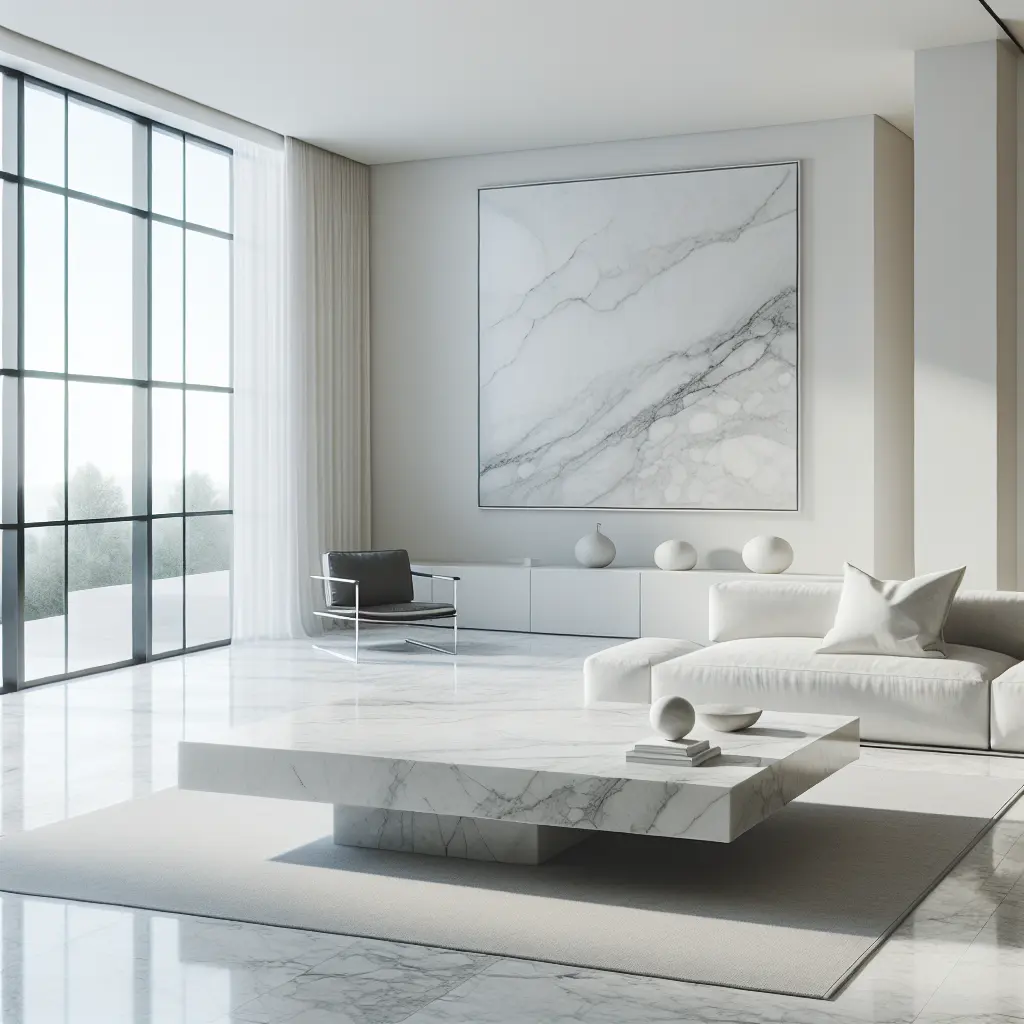
Minimalist design has always been about simplicity, functionality, and elegance. However, the integration of natural materials like marble has elevated this design philosophy to new heights. Moreover, marble’s timeless beauty and versatility make it a perfect choice for minimalist interiors. In 2025, the use of marble in minimalist design is evolving, incorporating innovative techniques and sustainable practices.
Why Marble Fits Perfectly into Minimalist Design
Minimalism emphasizes clean lines, neutral tones, and uncluttered spaces. Therefore, marble, with its natural veining and subtle textures, complements this aesthetic effortlessly. Additionally, its ability to create a sense of luxury without overwhelming the space makes it a favorite among designers. Furthermore, marble’s durability ensures that it remains a practical choice for both residential and commercial projects.
Monochromatic Marble Palettes for a Seamless Look
In minimalist design, color plays a crucial role, hence monochromatic marble palettes are gaining popularity. White marbles like Carrara and Calacatta are often used to create a seamless, cohesive look. Moreover, darker marbles such as Nero Marquina are being incorporated to add contrast, while maintaining the minimalist ethos. Consequently, these choices allow designers to achieve a balance between simplicity and sophistication.
Thin Marble Slabs for Lightweight Elegance
Although traditional marble slabs are still widely used, nevertheless, thin marble veneers are becoming a trend in minimalist design. These lightweight slabs are not only easier to install but also reduce material waste. Additionally, they can be used for wall cladding, furniture, and even lighting fixtures, thus expanding the possibilities for creative applications.
Combining Marble with Other Minimalist Materials
Because minimalism often involves mixing materials, marble is frequently paired with wood, glass, or metal. For instance, marble countertops combined with wooden cabinetry create a warm yet modern aesthetic. Meanwhile, marble and glass elements can enhance the sense of openness in a space, whereas metal accents add a touch of industrial chic.
Sustainable Marble Practices in Minimalist Design
As sustainability becomes a priority, therefore designers are opting for responsibly sourced marble. Recycled marble composites are also being used to reduce environmental impact. Furthermore, advancements in technology have made it possible to process marble more efficiently, thus aligning with the principles of eco-friendly design.
Conclusion
The use of marble in minimalist design continues to evolve, offering endless possibilities for creating elegant and functional spaces. Although traditional applications remain popular, nonetheless, innovative techniques and sustainable practices are shaping the future of marble in design. Finally, as we move further into 2025, the combination of marble’s natural beauty and minimalist principles will undoubtedly remain a cornerstone of modern interiors.


