
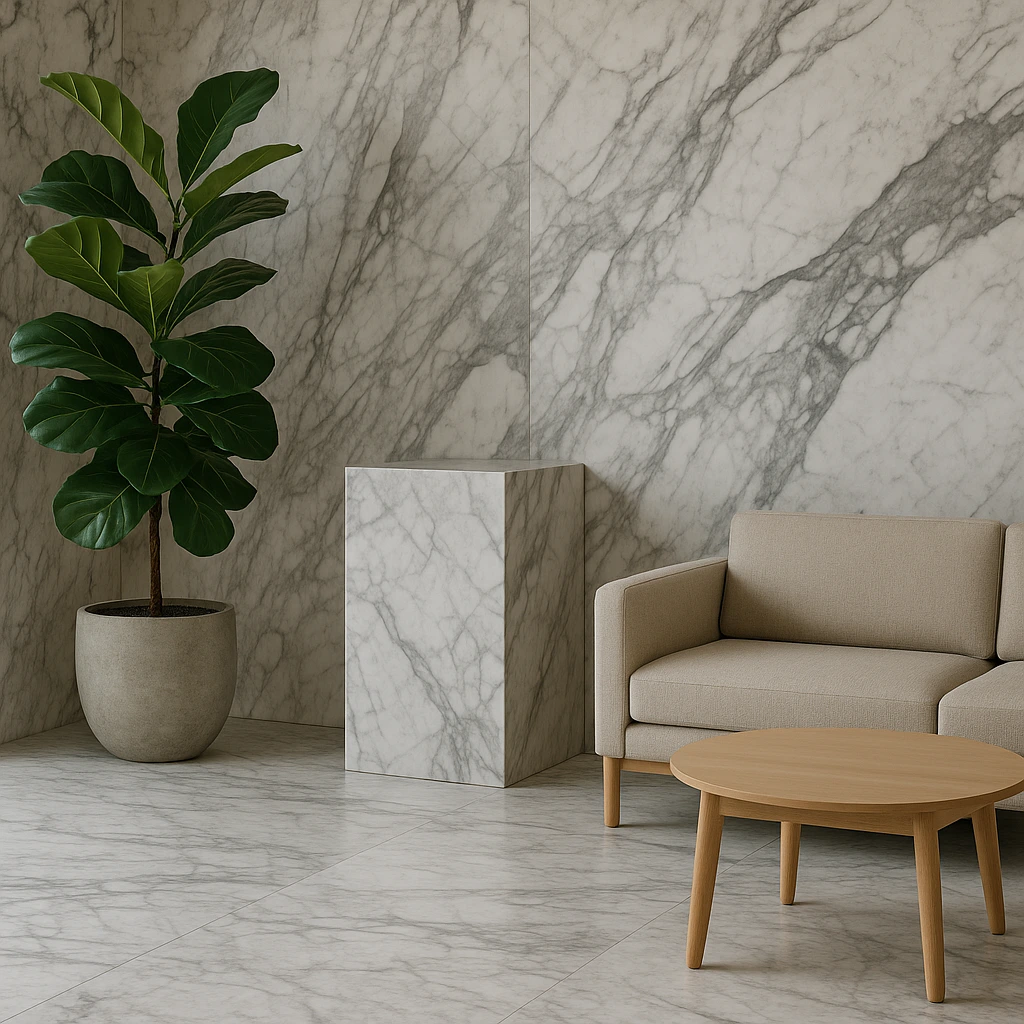
Marble has long been celebrated for its beauty, strength, and timeless appeal. But as environmental awareness grows, so does interest in understanding the true ecological footprint of this natural stone. Is marble a sustainable material? What are its environmental impacts throughout its life cycle — from quarrying to installation and beyond? In this article, we’ll explore these questions in depth, helping you make informed decisions about marble’s role in sustainable design and construction.
How Marble Is Sourced: The Quarrying Process
Marble is a natural stone that must be extracted from quarries, which are typically located in mountainous regions. The quarrying process involves:
-
Drilling and cutting large blocks of stone from the earth.
-
Transporting these blocks to processing plants where they are cut into slabs or tiles.
-
Finishing the stone by polishing or honing its surface.
This process requires significant energy, water, and fuel. Quarrying also changes the natural landscape and can result in habitat disruption, dust generation, and noise pollution. Responsible quarrying practices and site rehabilitation efforts can help minimize these impacts, but marble’s extraction remains resource-intensive compared to some alternative materials.
Energy Use and Carbon Footprint
The carbon footprint of marble comes mainly from:
-
Extraction and cutting operations: These consume electricity and diesel fuel for machinery and transport.
-
Processing: Shaping, polishing, and finishing marble require considerable energy.
-
Shipping: Because marble is often quarried in one country and shipped globally, transportation adds to its environmental cost, especially when heavy stone is moved long distances.
Compared to engineered stone or ceramics produced locally, imported marble can have a higher carbon footprint — especially if the supply chain isn’t optimized for sustainability.
Water Usage and Waste Generation
Marble processing uses large quantities of water, primarily to cool cutting equipment and reduce dust. In some regions, water recycling systems are in place to reduce consumption. However, in areas where water is scarce, marble production can strain local resources.
The cutting and polishing process also generates stone waste, including fine dust and off-cuts. While some of this waste is repurposed (e.g., in construction fill or as aggregates), a large portion still ends up as industrial waste if not properly managed.
Durability: A Strength in Sustainability
While marble’s extraction and processing have environmental costs, its exceptional durability offers a counterbalance. A marble floor, wall, or countertop can last for decades — even centuries — if properly maintained. This longevity reduces the need for frequent replacement, unlike synthetic materials that may degrade or go out of fashion more quickly.
In this way, marble can contribute to a more sustainable built environment by minimizing material consumption over time.
End-of-Life: Reuse and Recycling Potential
Marble is 100% natural and non-toxic, and it can be reused or recycled at the end of its initial life cycle. Salvaged marble from old buildings or installations is often repurposed in new designs, reducing the demand for newly quarried stone.
Some ways marble can be reused include:
-
Architectural salvage for restoration projects.
-
Cutting down large pieces for tiles or pavers.
-
Crushing waste stone for use as aggregate in construction.
Because marble contains no harmful chemicals or VOCs, it does not contribute to indoor air pollution or hazardous waste at the end of its use.
Responsible Sourcing and Certifications
As sustainability becomes a higher priority, more marble suppliers are adopting responsible quarrying practices and seeking environmental certifications. Key initiatives include:
-
Chain of custody documentation: Tracking the stone from quarry to project site ensures transparency.
-
ISO 14001 certification: Some quarries and processors are certified for their environmental management systems.
-
LEED credits: Using locally sourced marble or salvaged stone can contribute points toward LEED (Leadership in Energy and Environmental Design) certification in green building projects.
Choosing suppliers that prioritize sustainability can significantly reduce marble’s environmental impact.
Comparing Marble to Alternative Materials
How does marble stack up against alternatives from a sustainability perspective?
-
Versus engineered stone: Engineered stone (e.g., quartz surfaces) uses resins that are often derived from petrochemicals, which have their own environmental drawbacks. However, engineered products may have lower embodied energy if produced locally.
-
Versus ceramic or porcelain: These materials can be highly durable and often have a smaller environmental footprint, especially if manufactured close to the project site.
-
Versus concrete: Concrete is highly carbon-intensive but very durable. Like marble, it can last for decades but comes with a high embodied carbon cost.
The key is to consider the entire life cycle, from sourcing through to reuse or disposal.
How to Use Marble More Sustainably
If you want to incorporate marble into your design while minimizing environmental impact, consider these best practices:
Choose local or regional marble to reduce transportation emissions.
Select salvaged or reclaimed marble when available.
Specify thinner slabs or tiles where appropriate, reducing material use.
Work with certified suppliers that prioritize environmental responsibility.
Design for longevity so that marble installations remain functional and beautiful for as long as possible.
Conclusion
Marble’s environmental impact is complex. While its extraction and processing require significant resources, its natural durability and recyclability make it a potentially sustainable choice — particularly when sourced responsibly and used thoughtfully. By understanding marble’s life cycle and choosing products and suppliers that align with environmental values, designers and builders can help ensure that marble continues to be part of a sustainable future.


