
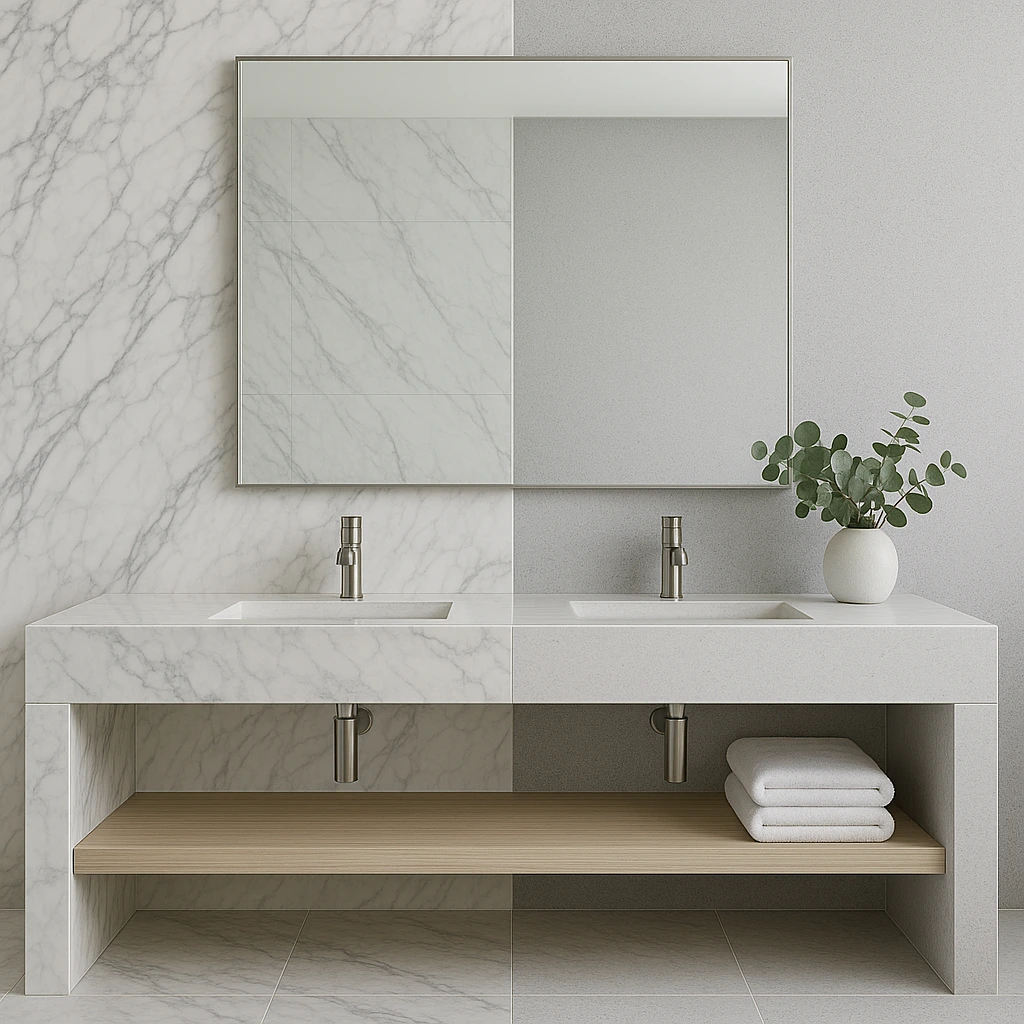
When designing interiors or planning construction projects, one of the most important material choices is between artificial stone (also known as engineered or synthetic stone) and natural marble. Both materials have their advantages and unique characteristics, but understanding their differences is key to making an informed decision. This article explores the properties, applications, and considerations of artificial stone and natural marble to help you choose the right option for your space.
What Is Natural Marble?
Natural marble is a metamorphic rock formed over millions of years from limestone under extreme heat and pressure. The transformation process creates a dense, crystalline structure that gives marble its signature beauty — unique veining, rich colors, and the ability to take a high polish. No two slabs of natural marble are exactly alike, which is why it’s valued as a luxurious and timeless material.
Key characteristics of natural marble:
-
Unique appearance: Each piece features one-of-a-kind patterns and colors.
-
Natural origin: Mined from quarries and cut into slabs.
-
Prestige: Historically associated with art, architecture, and wealth.
What Is Artificial Stone?
Artificial stone is a man-made material created by combining crushed natural stone, such as quartz or marble dust, with resins, pigments, and other additives. The mixture is molded into slabs and cured, creating a product that mimics the look of natural stone while offering enhanced functionality.
Key characteristics of artificial stone:
-
Consistency: Uniform color and pattern throughout the slab.
-
Customizability: Available in a wide range of colors, styles, and finishes.
-
Durability: Often engineered for improved strength, stain resistance, and ease of maintenance.
Appearance: Natural Beauty vs. Engineered Consistency
One of the most noticeable differences between natural marble and artificial stone is their appearance.
-
Natural marble offers visual depth and character thanks to its unpredictable veining and color variations. This makes it ideal for projects where individuality and natural beauty are prized, such as feature walls, sculptures, or luxury flooring.
-
Artificial stone provides consistency in pattern and color, which can be important in large installations where a uniform look is desired. It can also be designed to imitate marble, granite, or other stones — or to feature colors and patterns not found in nature.
Durability and Maintenance
Durability is often a deciding factor between these two materials.
-
Natural marble is strong but relatively porous. It can be prone to staining, scratching, and etching from acidic substances. Regular sealing and careful maintenance are essential to preserve its beauty over time. Marble is also more sensitive to certain chemicals and requires pH-neutral cleaning products.
-
Artificial stone is engineered to resist stains, scratches, and heat more effectively. Its non-porous surface means it does not require sealing, and it is generally easier to clean and maintain. This makes it especially popular in busy kitchens, bathrooms, and commercial settings.
Cost Considerations
Cost can vary widely for both natural marble and artificial stone depending on the type, source, and quality.
-
Natural marble tends to be more expensive due to quarrying, transportation, and finishing costs, as well as its rarity and unique patterns. High-end marble types such as Calacatta or Statuario command premium prices.
-
Artificial stone is generally more affordable, especially for large projects requiring many slabs. Since it is manufactured, there are fewer limitations in supply and lower transportation costs, which can help reduce overall project expenses.
Sustainability and Environmental Impact
Sustainability is an increasing concern in material selection.
-
Natural marble is a finite resource, and quarrying can have significant environmental impacts, including habitat disruption, energy use, and waste generation. However, it is a natural, recyclable material with a long lifespan.
-
Artificial stone is often made using recycled stone fragments and can be produced with minimal waste. However, the resins used in artificial stone may be petroleum-based, and manufacturing processes require energy and generate emissions. The overall environmental impact depends on the specific product and production methods.
Applications and Design Flexibility
Both natural marble and artificial stone offer versatile design options, but they shine in different areas.
-
Natural marble is favored for statement pieces where the natural veining and variation enhance the design — such as fireplace surrounds, luxury bathrooms, tabletops, and artistic installations.
-
Artificial stone is ideal for uniform surfaces in kitchens, bathrooms, and commercial spaces. It can be molded into shapes and sizes not easily achievable with natural stone, offering more design flexibility for integrated sinks, curved counters, or large-format panels.
Longevity and Timeless Appeal
-
Natural marble is a material that can last for centuries when properly cared for. Historic buildings and sculptures made from marble continue to inspire awe today. Its timeless beauty and association with tradition make it an enduring choice.
-
Artificial stone offers excellent long-term performance but may not have the same historical cachet or natural uniqueness. Trends in artificial stone colors and patterns can also change over time, potentially dating certain designs.
Conclusion: Which One Should You Choose?
The choice between natural marble and artificial stone depends on your project’s priorities:
Choose natural marble if:
-
You value unique, natural beauty and individuality.
-
You’re aiming for a luxurious, timeless design.
-
You’re prepared to invest in regular maintenance to preserve the material.
Choose artificial stone if:
-
You want a consistent, uniform appearance.
-
You need a material that is easy to maintain and highly durable.
-
You’re working with a tighter budget or need large quantities.
Ultimately, both materials have their place in modern design, and many projects successfully combine the two for optimal function and aesthetic impact.


